From 18% Bounce Rate to 17% Reply Rate - Here's Exactly How It Happened

Bhanu Singh
5 min read · 7 Jun 2026

Fair warning - this one's a brag. An earned brag. And at Senko GTM, we believe in showing the receipts.
Let me set the scene.
Two months ago, a new client came in. Different industry from what I usually work in. Clean slate, no pre-built assumptions, no shortcuts borrowed from past wins.
And here's where I need to give you a bit of context - because the starting point matters.
The Benchmark I Built First
Before this client, my bread and butter was Recruitment Firms. And over time, something clicked. Consistently hitting 8%+ reply rates. 40% of those replies positive. Not a fluke - a repeatable, documented pattern.
That's the bar I set for myself. Not the industry standard "2-3% is fine" baseline that most agencies quietly accept. That kind of bar builds complacency, not craft.
When you know what good looks like in one vertical, you stop guessing in the next one. You bring a process, not a prayer.
The Diagnosis Nobody Wants to Do First
So I walked into this new client's setup - and the first thing I did was ignore the copy entirely.
That surprises people. Copy is usually the first thing everyone wants to fix. New client = new messaging. But I've learnt to read the room before I rearrange the furniture.
The email infrastructure was a wreck. 18%+ bounce rate. Nearly one in five emails wasn't landing in an inbox - it was disappearing into the void. Flagged, bounced, lost.
Here's the thing about a bounce rate like that: it's not a copy problem. It's a foundation problem. And you cannot build anything on a cracked foundation. You can write the most precise, personalised, high-signal cold email in the world - and it won't matter if it never arrives.
So. Foundation first.
Month One: Unglamorous, Necessary, Done
Month one was not exciting. No big wins to report. No reply rate spikes. Just the quiet, methodical work of getting the infrastructure right.
Domain health. Warmup protocols. Sending volumes. List hygiene. The mechanics that experienced GTM operators know cold - and that newcomers skip because they can't see the ROI yet.
By the end of month one: bounce rate sitting at 1.7-3%. Down from 18%+. Foundation solid.
Now we build.
Month Two: Copy, Strategy, Patience
Month two was where the real work started - and where most people would have panicked.
Rebuilt the copy from scratch. Dialled in the sending strategy. Set it loose.
First two weeks? Quiet. A handful of "not interested." A few OOOs. Some silence that could easily be mistaken for failure if you didn't know what you were looking at.
But I knew. When you fix the foundation first and then build properly, there's always a lag. The machine needs time to warm up, earn trust, find its rhythm. Patience isn't passive - it's part of the strategy.
Then week three arrived.
Replies. Positive ones. Not a trickle - a proper rush. The kind of week where you're genuinely scrambling to keep up with responses you've been engineering for sixty days.
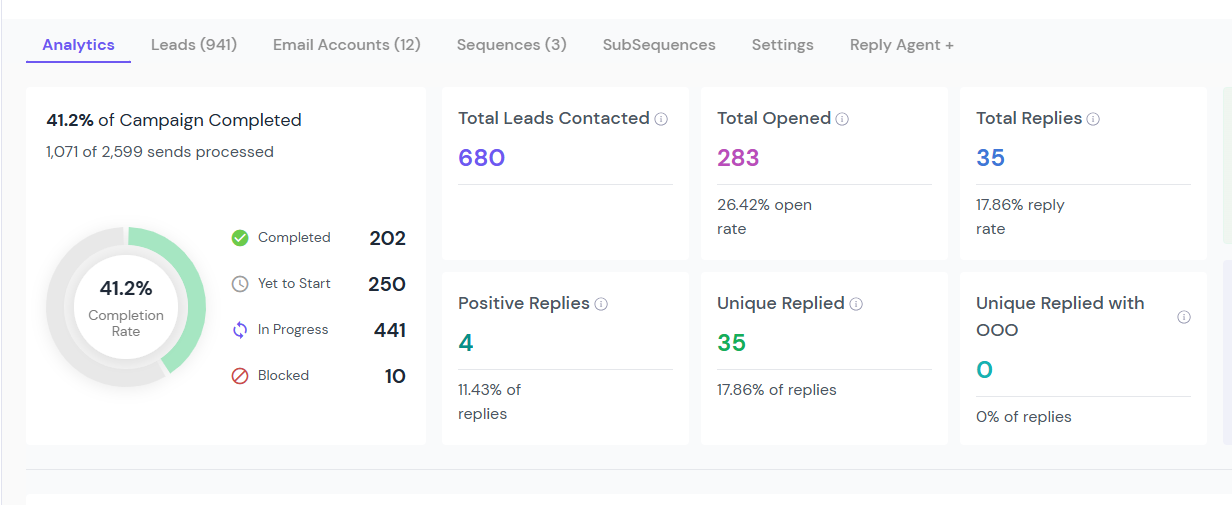
17% reply rate. New industry. New client. Same process.
What This Actually Proves
This isn't a story about luck or a hot campaign or a market that happened to be ready.
It's a story about sequencing.
The order in which you pull the levers is everything. Fix the infrastructure before you touch the copy. Earn deliverability before you ask for attention. Let the system breathe before you judge it.
Most outbound failures aren't strategic failures. They're sequencing failures. Someone wrote brilliant copy on top of a broken foundation and wondered why nothing converted. Someone got impatient in week two and overhauled the messaging right when it was about to work.
The process works. Patience just gives it the time to prove it.
If you're sitting on broken infrastructure or a flat reply rate and wondering where to start - this is exactly the kind of diagnostic work we do at Senko GTM. The fix is usually not where you're looking.
Free sample · no call required
Want to see this applied to your desk?
Get a free sample list of companies hiring in your niche right now — decision makers and verified emails included.
Get my free sample